
What a big anniversary today is for me! Three years ago today, April 18th, 2019, I hit my first health goal of reaching a healthy BMI. It’s been a roller coaster ride ever since!
There have been several moments these past three years where I learned a lesson related to health, wanted to share it on my blog, but chose not to because there wasn’t enough information to warrant an entire post. I kept these lessons to myself and would share them through conversations with those who would reach out. These lessons and conversations have grown into quite the collection throughout the course of three years, so I thought it’d be fun to create a post that’s a collage of lessons related to the wide field of health (physical health, mental health, body image, intuitive eating, healthy living, fitness, etc.)
A preface: most of these are lessons I learned through my own health journey, but not all of them are mine or mine alone. Some were taught or told to me by others who have given me permission to share their wisdom/experience in anonymous form. I’ve decided to make this post a true collage of many stories/conversations to be molded together as one. I hope it’s useful however you need it to be today or in the future!
Fad Diets are Harmful
We’re all guilty of it: looking in the mirror and only noticing the parts of our body we don’t like. This negative encounter can sometimes lead to a desire to want an instant “fix” or a “quick solution” to our “problem.” So we pick up the phone, search the web, and find programs or diets that promise to offer us this “quick solution.” We see the “proven results” from others, the step-by-step plan that seems easy enough to follow for a while, or any other selling point that has been meticulously crafted to lure us in. Then we buy into this “promise” from this quick-fix diet and we dedicate ourselves for a period of time. Sometimes it works and you’re in “Position A” where you see that 10, 15, or 30+ pound weight-loss you were promised. Sometimes it’s too impossible and you find yourself in “Position B” where you cave into temptation and convince yourself you’re the problem.
Here’s the truth: both positions lead to the same place–ending up where you started. In the case of “Position A,” the diet/routine of a quick-fix program/diet is not possible to sustain long-term. Therefore, the moment that “desired weight” is achieved, old habits will easily resurface and the weight will return to what it once was. In the case of “Position B,” it was never your fault. Fad-diets aren’t normal or reasonable to maintain, so it’s only normal it didn’t workout–it’s not meant to. It’s meant to be a repeated cycle so the company continues to get money or the trend continues to hold its consumers.
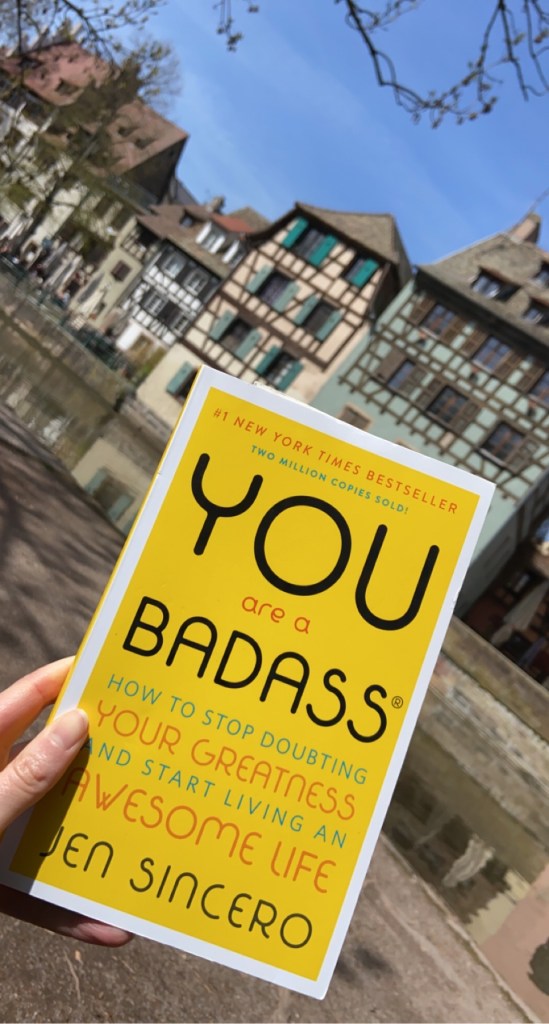
Fad diets are harmful–they try to sell an idea that permanent, body-positivity can be obtained quickly if a high effort is given for a short period of time. But this isn’t true. Body positivity comes from within ourselves, and it can (and should) be given at any weight–all bodies are beautiful bodies! And if you don’t believe that, I’d like to recommend that self-help book You Are a Badass. If you desire to change the body that you’re in, then it’s going to require slow, steady progress. The road will be long and challenging–there’s no way around it. However, the long road will lead to life-changing results. So don’t let that negative moment in the mirror lead you down the road of lies that fad-diets have created. Keep your eyes on the bigger prize–your happiness and what’s truly important to you.
The Key to a Successful Journey: Changing Habits and Staying Consistent
This lesson echoes off of the lesson that fad-diets are harmful. The only way one will see a change to their health is by changing habits and staying consistent. Mark Twain said, “Quitting smoking is easy–I’ve done it a thousand times!” His point is that making the decision to change and starting the change is not the difficult part of the journey–the challenge is staying motivated and determined within the long-haul of the journey when temptation strikes. In these moments, your “why” and discipline are tested, so they need to be strong. Why do you want to change your ways? Why do you want to see the results you desire? If your answer(s) to the ‘why’ is/are based on something shallow or impersonal like “fitting into a dress” or “flexing on my ex,” then your journey will likely fail. If your “why” is based on what’s meaningful or personal to you like, “I made a promise to myself to see this through” or “improving my overall health to decrease health issues in the future,” then you’re more likely to be unyielding in those challenging moments.
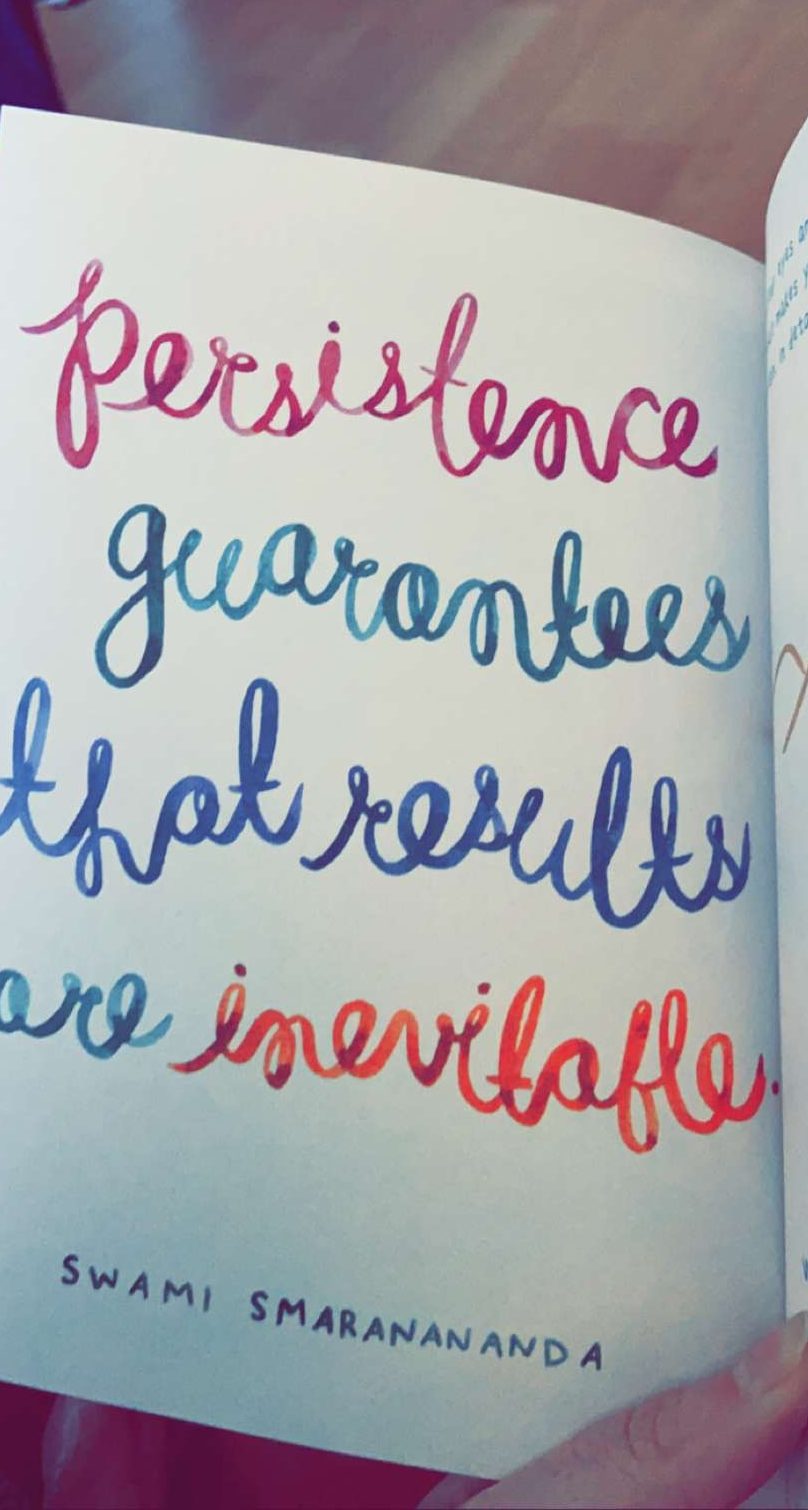
However, what sets us up for success in the moments of temptation are changing habits and consistency. Therefore, if you are beginning your health journey, I encourage you to think of habits you currently have that prevent you from reaching your goal(s). They can be physical like “drinking too much soda” & “not exercising,” and/or they can be mental such as “talking negatively to myself each morning” & “comparing myself to others.” Next, think of a reasonable action or course of actions you can take to change these habits. Then, make a plan to commit to these actions to change your habits. This will be the challenge. Bad habits didn’t form in a single day, so breaking them will be hard. But remind yourself of your “why.” Why is it important to you that you chose to change THIS habit? What results will it yield? Why is that important to you? Then remain dedicated and consistent with your actions. It’s not going to be easy, but you know you can do it!
I also want to mention that an extremely useful tool for me was to focus on one habit at a time and build up from there. I did my best not to feel the pressure of my overall goal, so I focused on smaller goals to achieve each week/month which helped lead me to achieve my overall goal. I wrote about it in my post “How I Did It.”
You Gotta Do It For: You.
This is a lesson a friend shared with me and gave me permission to post as long as she remains anonymous. She shared with me one of her early health journeys and how it was centered around all the wrong things. She always felt like the “fat” kid of the group and was bullied because of her weight. She felt undesired by society because she didn’t see her body being represented as “beautiful” anywhere. So what changed for her? Well, she dated a boy for about a year, then he broke up with her. She believed this breakup was solely because of her weight (spoiler: it wasn’t!) So, she went on a health journey that was laser focused on the idea of the “revenge body.” It was this desire to get a “perfect” body to flex on her ex, to show off to all her bullies, to wear the damn dress, etc. She worked HARD and got to her goal weight, but when she was there she realized that none of these notations actually mattered. Her ex wasn’t impressed with her “new body,” and frankly–she didn’t desire to be with him any more since this journey gave her a new perspective of self-worth. People still commented on her body in ways that were painful, and not all clothes felt incredible. (Pausing her story to add: I believe this is a “bubble burst” everyone experiences on some level when going through a health journey. I wrote about mine in the post “I had Fantasies.”) She said that these realizations kept coming, and coming, and coming to the point where she felt like the extensive working out and the drilling diet weren’t worth it; therefore, she fell back into her old habits.
She learned that this particular journey fell short because she did it for others–not herself. This is a major key when going on a health journey. I mentioned previously that your “why” has to be strong for those moments of temptation, but be weary that your “why” revolves around yourself. If you’re working out to flex on or impress others with a “revenge body”–it’s going to lead to disappointment. It just is. Your journey has to be about yourself for yourself.
Food as a Reward Can be Dangerous
A *major* warning that this lesson is personal. I wrote in my earliest post, How I did It, that I had cheat days in the beginning of my health journey. I also explained in my post, 2020 Reflection, that I’d have cheat meals on occasion. I believed cheat days/meals were important to include during those times because I was laser focused on reaching a goal, and the cheat days/meals helped me remain consistent. For example, in 2018 when I was trying to reach a healthy BMI, having a cheat meal on Wednesdays and a cheat day on Saturdays helped me when making healthy choices on the other days. If I craved something unhealthy, I could convince myself that I could wait one or two more days to have it. In 2020, I was training to run a 10K, and I noticed that mixing my diet with healthy/unhealthy choices at random was negatively impacting my running. Therefore, I meticulously set up days for a cheat meal when it wouldn’t impact my running workouts. I felt like these were valid, and that I was doing right by myself for my goals. This is the tricky part: I didn’t notice it at the time, but I’ve learned that my cheat meals lead to what I wrote about in my post “Mental Health is Physical Health.” I’ve learned that I subconsciously started making a distinction of food being “bad” or “good” when I made cheat meals in 2020. I thought I was labeling it as healthy for my body & beneficial for my goals vs. unhealthy for my body & not necessary for my goals, but I wasn’t. I was using food as a reward. It was more like, “If you do ‘good’ all week, then you’ve earned one–and only one– ‘bad’ meal.” This was a very damaging impact on my mental health; I would fixate on what food I was eating, and I’d beat myself up over it. It should never be this way. We should never convince ourselves that we “deserve” food– food is essential to life! We don’t “deserve” it–we need it!
I struggle with this at times, but I am currently in favor of cheat meals or cheat days for those starting a journey because I do think it helps with the essential consistency. HOWEVER, I give this favor with extreme caution. It’s easy to do what I did, because this is often done subconsciously. What helped me overcome this mentality is positive thinking. Maybe it sounds a little silly, but I actively work on starting my days with a positive note and refusing to label food as “bad” or “good” but fuel for when I’m low on energy. For example, if it’s that time of the month, and I feel like the best energy for my body is a chocolate cupcake–then I’m going to eat the damn cupcake! There’s NO shame in it because I started my day by telling myself how powerful my body is for enduring all the pain it’s going through– and if a cupcake helps ease the pain then let’s do it!
Major Keys: Positive Thinking & Patience
I wrote in my post “2020 Reflection” that there was a time when I would start my days very negatively–maybe by degrading myself in the mirror or by negatively comparing myself to others on social media. When my mental health was struggling during the COVID lockdown, I found myself in a horrible, negative state of mind. My days felt like a vicious cycle that went like this: I’d look in the mirror, hate the body I saw, weigh-in, shame myself for maintaining or gaining, and beat myself up all day over it. I’m so thankful that I got help to end this cycle, but it’s something I have to actively work on every day: positive thinking.
I didn’t make the change on my own; I had help. Many lessons came from this experience, but one quote always sticks with me if I’m having a down day. I was told, “If you start your day on a negative, shaming note, then how do you expect the rest of your day to go? You’ll be a lot more likely to make poor health choices, because you started your day by telling yourself that you can’t do it. What if you change the narrative? There’s nothing in that precise moment (of looking in the mirror) you can do to change how you look–so instead of thinking about ‘what’s wrong,’ focus on what’s good and set intentions for your day.”
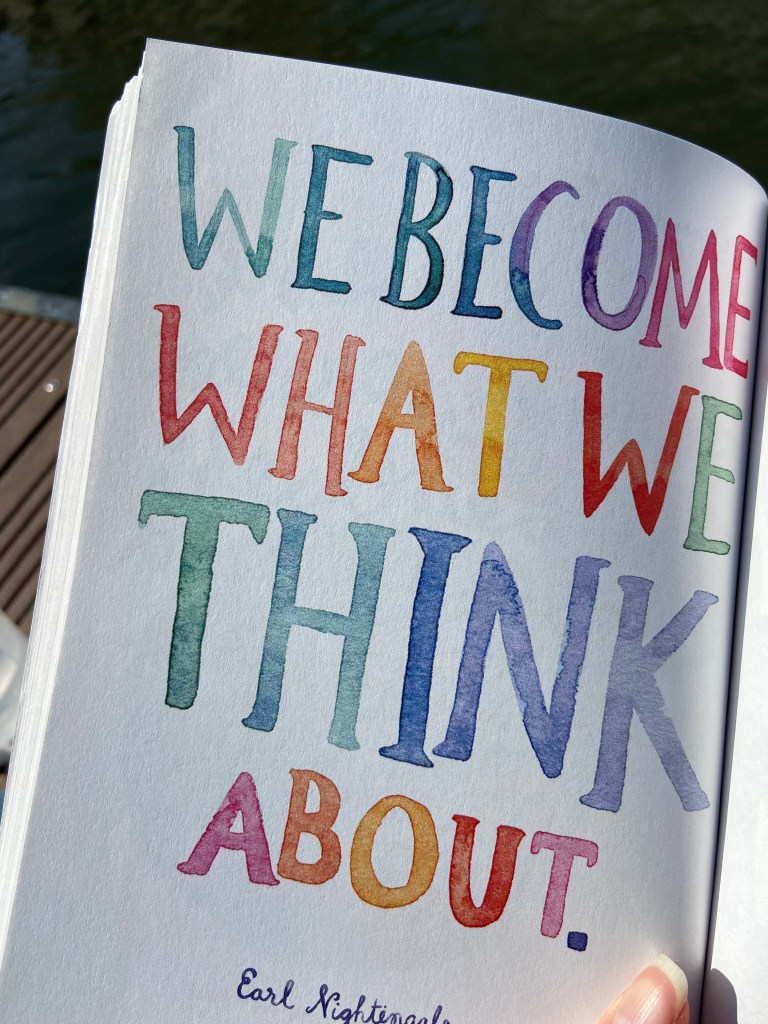
I tried what was suggested, and it’s CRAZY how drastically everything changed. Days were happier–easier even. I wasn’t fixated on the food I was eating, and I worked out to relieve any stress, anxiety, or negative energy. I saw a positive change in my body all because I worked on changing my mindset. Truly, speaking words of affirmation to yourself, reading self-help books, and working on giving self-love and appreciation does WONDERS for your physical health.
Patience is also a major key. A health journey WILL NOT be a steady, uphill journey. There will be moments/weeks/months of triumph, but there will also be moments/weeks/months of defeat. The key is not letting those defeats end your journey. If it knocks you down 9 times, then get up 10! You have to have patience through those downs, and I’d argue that positive thinking helps overcome the sadness you might feel in those moments. It helped me to realize that those “down” moments are natural and experienced by everyone; it’s not my fault, and I can overcome anything. You can too 🙂
Any Workout is a Great Workout
I learned through the past three years how working out can be used. I started working out in the winter of 2019 purely to aid my weight-loss journey. Y’all–I started out HATING it! Truly cannot emphasize enough how much I dreaded workout time. However, I began to realize how much better I’d feel afterwards and became addicted to that feeling. In the Fall of 2019 through the Summer of 2020, I realized that working out with intentions/goals yielded great results. So, I’d sign up for fitness challenges or races to help myself be motivated in each workout to do my best.
After my hardships from COVID, I needed to recover by easing pressure off myself. So, I’d workout JUST to have the satisfaction of finishing a workout, doing something positive for myself, or easing stress, anxiety or negativity. I wouldn’t put internal pressure to perform my best–the goal was to move. These workouts helped me reclaim my health journey, and taught me two things: we should enjoy the workouts we do, and working out without intention can also yield great results. By just moving my body (rather than performing my best,) I was able to further my positive mindset and further the desire to make healthy choices for the rest of the day. I was motivated to move my body because I had found workouts that I truly enjoyed. So if you’re not liking your workout routine–change it up! Great results can come from simply enjoying what you’re doing.

Body Image Impacts All Bodies
This one is the most difficult for me to talk about, because it’s admitting to previous ideas that were harmful to others. However, it’s arguably one of the most important lessons I’ve learned… I’m just embarrassed that it took me 22 years to learn it. If you read this lesson, I ask that you please read it in its entirety because I have to talk about “the before” (when I was unaware) to explain the lesson I learned.
The general concept is this: Every. Single. Person. Struggles with body image to some level. Even those who have the body or body type that you desire still have body image struggles of their own.
Here’s the story: I’d always been bigger and secretly envied my friends who were smaller. Around the time when I was in high school, there was a movement that was gaining momentum about how people should celebrate larger bodies. I remember being so thankful for this movement, because I had never felt positive recognition for my body size. However, looking back, this movement gave body positivity to larger bodies by shaming smaller bodies. For example, Nicki Minaji’s song “Anaconda:” “F*** the skinny b****es in the club! I wanna see all the big, fat a** b****es in the club, f*** you if you a skinny b****.”
I remember scrolling through Facebook at the time, and someone with a smaller figure posted an article entitled, “If you can make fun of my size 00, why can’t I make fun of your size 16?” (I want to pause the story and say there are SO many things wrong with this title that should be addressed, but I’m going to focus on the story at hand for now.) When I read the title, I didn’t give her the time of day to read the article or her caption–pretty sure I rolled my eyes and moved along. Why? 1) I truly never thought that someone with a small frame (which I envied) could have body-image issues and be hurt by comments on their body. 2) I thought the answer to the article’s question was simple: “Because society puts a size 00 on a pedestal and my size is labeled as undesirable. Because a size 00 can go to ANY store and find clothes that will fit, but I have to go to select stores that only have a small corner of hideous clothes in the back.”
I know now that these ideas are extremely shallow, and I’m deeply embarrassed for ever thinking them; however, I realized through my health journey that I’m not alone. When I lost the weight, people started commenting more and more on my body then they had when I was bigger. I’d be told that “I’m not eating enough” or “I look anorexic” or that I’m “too skinny.” The pain of these comments was the exact same pain as the comments I’d receive when I was bigger (I’m eating too much, I look obese, I’m so fat, etc.) The difference is that I’d receive more of these comments when I was smaller.
This is when it clicked to me that these people felt valid or no-shame in making these comments about my smaller figure because society has deemed it “more okay.” We acknowledge openly and fiercely that it’s mean to comment negatively on someone’s figure or eating habits if they’re bigger, but we don’t do so as much for someone’s figure who is smaller. I have friends with small frames who have opened up to me about stories of how they’ve been picked on and made fun of for their body size or their eating–each story breaks my heart. You can hear the pain these comments caused them, but you can tell through the story that the person who made the comment(s) felt like they could say these things because “they’re skinny” so it “doesn’t hurt them.”
Yes, society did label smaller frames as “beautiful” and outcast bigger frames. But it’s up to us to end that shallow mindset, and genuinely work towards being kind and accepting to all bodies. It’s wrong to try to end that cycle by picking on someone who has a smaller frame; just as it’s wrong to tell someone with a bigger frame that they’re not just as beautiful. Body image impacts us all, and we have to be kinder to each other about it. We have to work together, and we have to focus on health and happiness–not the frame of the body.
I want to thank and dedicate this post to anyone who ever opened up to me, directly or indirectly, about their health journey or struggles. It’s difficult to open up about, so I deeply appreciate you doing so. ❤ If you want to reach out, you can find my contact here.
 My Health Journey